Lyon, Beaune and Burgundy’s Vineyards
Lose yourself in the world of fine wine and gothic castles, as you travel to the heart of the stunning Burgundy region.
Highlights
- -Historic Lyon & Basilica View
- -Hospices de Beaune
- -Château de Pommard Tasting
- -Château de La Rochepot
Gallery
About this experience
Guide and Driver will pick up clients from their hotel or residence.
The guide will escort the client through the UNESCO World Heritage site of the old town of Lyon, discovering the heritage, highlights, history and famous cuisine of the burgundy capital; passing by the Town Hall, Bartholdi Fountain, Place des Terreaux, Cathedral of Saint John the Baptist and Place Bellecour. This will be followed by the clients will embark on a local tasting savouring the specialities of Lyon. Then after, the clients will make their way to the other UNESCO World Heritage site The Basilica of Notre Dame de Fourvière. Lyon - Lyon has a location at the geographic crossroads of the country, north of the natural corridor of the Rhône valley (which extends from Lyon to Marseille ).
Located between the Massif Central to the west and the Alpine massif to the east, the city of Lyon occupies a strategic position in north-south traffic in Europe. Former capital of Gaul at the time of the Roman Empire , Lyon is the seat of an archbishopric whose holder bears the title of primate of Gauls. Lyon became a very commercial city and a first-rate financial center during the Renaissance. Its economic prosperity was carried successively by the silk industry, then by the appearance of industries notably textiles, chemicals, and more recently, by the image industry. Lyon, historically an industrial city, has hosted many petrochemical industries to the south of the city along the Rhône, called the chemistry corridor.
After the departure and closure of the textile industries, Lyon gradually refocused on the sectors of advanced techniques, such as pharmacy and biotechnologies. Lyon is also the second largest student city in France, with four universities and several grandes écoles . Finally, the city has preserved an important architectural heritage from Roman times to the 20th century through the Renaissance and, as such, the neighborhoods of Vieux Lyon, The hill of Fourvière , the peninsula and the slopes of the Croix-Rousse are on the list of World Heritage of UNESCO. Basilica of Notre Dame de Fourvière - It was built with private funds between 1872 and 1884 in a dominant position overlooking the city. Fourvière is dedicated to the Virgin Mary, to whom is attributed the salvation of the city of Lyon from the bubonic plague that swept Europe in 1643.
Each year in early December (December 8, day of the Immaculate Conception), Lyon thanks the Virgin for saving the city by lighting candles throughout the city, in what is called the Fête des Lumières or the Festival of Lights. The Virgin is also credited with saving the city a number of other times, such as from a Cholera epidemic in 1832, and from Prussian invasion in 1870. During the Franco-Prussian War (1870–1), Prussian forces, having taken Paris, were progressing south towards Lyon. Their halt and retreat were, once again, attributed by the Church to the intercession of the Virgin Mary.
Speculating on the reasons for the construction of such an elaborate and expensive building, one author makes the statement that: "The reaction to the communes of Paris and Lyon were triumphalist monuments, the Sacré-Coeur of Montmartre and the basilica of Fourvière, dominating both cities. These buildings were erected with private funds, as gigantic ex-votos, to thank God for victory over the socialists and in expiation of the sins of modern France.” Perched on top of the Fourvière hill, the basilica looms impressively over the city of Lyon, from where it can be seen from many vantage points; not unintentionally, the Basilica of Fourvière has become a symbol of the city. The Basilica, which offers guided tours and contains a Museum of Sacred Art, receives 2 million visitors annually. At certain times, members of the public may access the basilica's north tower for a spectacular 180-degree view of Lyon and its suburbs. On a clear day, Mont Blanc, the highest point in Europe, can be seen in the distance.
Guide and Driver will pick up clients from their hotel or residence.
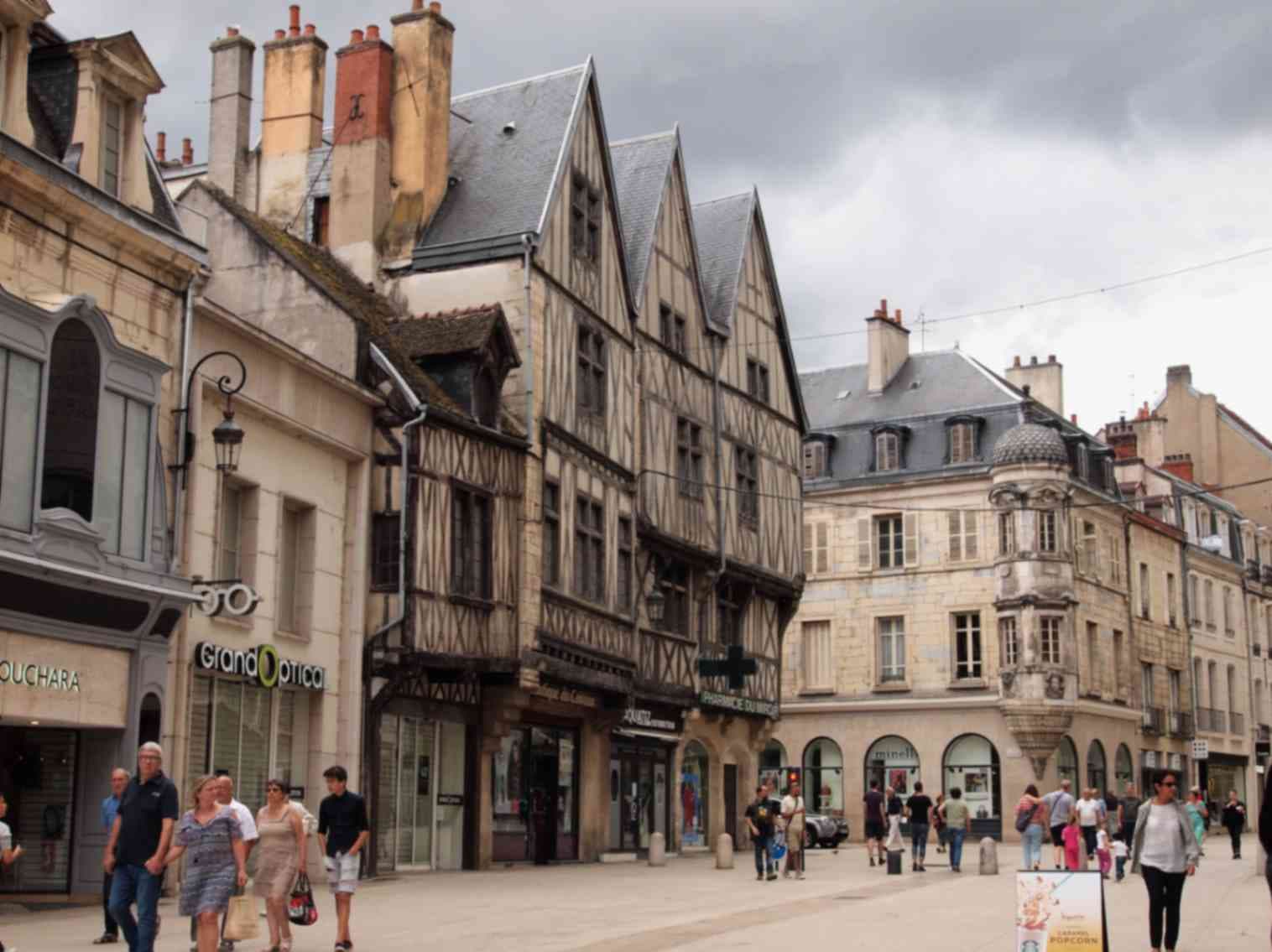
The guide will lead the clients inside the famous Hospice de Beaune where the guide will unravel the history and unique architecture of the Hospice which became a trend within the burgundy region. Beaune - Beaune is one of the key wine centers in France, and the center of Burgundy wine production and business. The annual wine auction of the Hospices de Beaune is the primary wine auction in France. (The hospice structure, in the town center, being one of the best preserved renaissance buildings in Europe.). The town is surrounded by some of the world's most famous wine villages, while the facilities and cellars of many producers, large and small, are situated in the historic center of Beaune itself, as they have been since Roman times. With a rich historical and architectural heritage, Beaune is considered the ""Capital of Burgundy wines”. It is an ancient and historic town on a plain by the hills of the Côte d'Or, with features remaining from the pre-Roman and Roman eras, through the medieval and renaissance periods. Beaune is a walled city, with about half of the battlements, ramparts, and the moat, having survived in good condition. The central ""old town"" or ""vieille ville"" is extensive. Historically Beaune is intimately connected with the Dukes of Burgundy.,Landmarks in Beaune include the old market (les Halles), the 15th-century Hospices, the Beffroi (clock tower), and the collegiate church of Notre Dame. Beaune is the main center for the ""Burgundian tile"" polychrome renaissance roofing style of the region.
Hospice de Beaune - The Hôtel-Dieu was founded on 4 August 1443, when Burgundy was ruled by Duke Philip the Good. The Hundred Years' War had recently been brought to a close by the signing of the Treaty of Arras in 1435. Massacres, however, continued with marauding bands (écorcheurs) still roaming the countryside, pillaging and destroying, provoking misery and famine. The majority of the people of Beaune were declared destitute. Nicolas Rolin, the Duke's Chancellor, and his wife Guigone de Salins, responded by building a hospital and refuge for the poor. The majority of the population of Beaune were destitute, and the area had recently suffered an outbreak of plague. Having gained permission from Pope Eugene IV in 1441, the hospice was built and consecrated on 31 December 1452.
In conjunction, Rolin established the ""Les sœurs hospitalières de Beaune"" religious order. The building's design was probably overseen by the Flemish architect Jacques Wiscrère and remained as a hospital until the late 1970s. There is a documentary record of a large range of Flemish and French masons, painters and glass cutters employed for its construction. The facade is today regarded as a superior example of Northern Renaissance civic architecture and a treasure trove of panel painting, given its numerous portraits of Rolin, his wife and members of his extended family.
The Hospices de Beaune consists of a pair of two-storied buildings arranged around a stone courtyard. The building wings are well-preserved today; they contain half-timber galleries and ornate rooftops with dormer windows. The hospital is arranged so that the wings served the office, kitchen and apothecary functions. The nuns and patients were housed nearer the chapel, towards the center of the complex. The Hospices de Beaune received the first patient on 1 January 1452. Elderly, disabled and sick people, with orphans, women about to give birth and the destitute have all been uninterruptedly welcomed for treatment and refuge from the Middle Ages until today. This Catholic institution focused on healing both the body and spirit of its patients. Over the centuries, the hospital radiated outwards, grouping with similar establishments in the surrounding villages of Pommard, Nolay, Meursault. Many donations - farms, property, woods, works of art and of course vineyards - were made to it, by grateful families and generous benefactors. The institution is one of the best and oldest examples of historical, philanthropic, and wine-producing heritage, and has become linked with the economic and cultural life of Burgundy.
The clients will be taken to a local vineyard where they will indulge into a Burgundy Vineyard tasting and visit of the Chateau estate. Chateau de Pommard - In 909 Winemaking in Pommard began to first blossom when Benedictine monks planted the first Pinot Noir root stocks. It wasn't long before Pommard emerged as one of the first villages in Burgundy to become renowned for fine Pinot Noir. The village of Polmarium refines it name to Pommard around this time too, after it is first mentioned in the history books in 1005, as or Polmareo. In 1340 Pinot Noir, the noble grape that grows in Clos Marey-Monge, receives its iconic name around this time. The name is borrowed from the French words for pine and black; the pine refers to the grape variety having tightly clustered, pine cone-shaped bunches of fruit. 1756 the founder, Vivant Micault, bequeaths his Pommard estate, and the winemaking facilities and production, to his sons, Joseph and Jean. The brothers decide to auction the estate between them amicably. Joseph became the sole owner of Château de Pommard, buying the property outright from Jean for the sum of 90,000 francs.
Jean Micault was guillotined, in the centre of Dijon, in 1794. In 1863, the 800-meter-long cellar, hidden underneath the cobbled courtyards above are, for the first time, given a name: “Thunder Cellar”. We still call it that today. It had previously between referred to as “Hollow Tile”. The cellar maintains a year-round temperature between 55 °F and 60 °F (13.0 °C and 15.5 °C) – the optimal condition for wine storage and aging. The cellar maintains a naturally cool temperature due to the Avant-Dheune river that flows down from the hills of Pommard. First built between 1720 and 1730, our cellar has been modified and restored several times since. in 1892, Following in the literal footsteps of Dr Jules Lavalle, noted soil authorities Rene Danguy and Charles Aubertin announce in their book, Les Grand Vins de Bourgogne (La Côte d’Or), agree that Clos Marey-Monge’s terroirs are indeed premiére cuvée. In 1903, Clos Marey-Monge's oldest vines, located in the Chantrerie plot, are planted this year.
Today they are more than a 110 years' old, producing a grape of superior quality. The average age of vines in the Clos are more than 45 years. In wine, age is beauty. In 1926, Edîth Marey-Monge, in possession of the estate since age 19, marries Hervé de Blic, a man with an illustrious background from the prestigious de Blic family, one of the oldest feudal and military nobilities of Burgundy. Upon her husband's death, Edîth handed the reigns of the estate to her son Emmanuel de Blic, the last remaining member of the Marey-Monge family. Emmanuel was born on the grounds of the Château. After Edîth's death, Emmanuel sells the estate to Charles-Georges d’Epinay. In 1936, the Appellation d'Origine Contrôlée (AOC) in Pommard is created. Pommard is one of the first villages to be designated AOC for red wine. The AOC is created to ensure that wine with a long history and a deep-rooted sense of provenance retain their identity in the marketplace and ensure no other wines, or products, can carry the name Pommard.
In 1982, Providing the backbone of the acclaimed flavors and aromas of Clos Marey-Monge, the Grand Champs plot was planted in 1982. Making up more than 25 per cent of the Clos, Grand Champs is more than 220 rows, just under 4ha. In 2003, Following the purchase of the estate by the Giraud family, the first element of the winemaking process to be modernized was the change between French Oak foudres, wooden barrels, to stainless steel fermentation vats. Mr Laplanche had always sought to retain French Oak fermentation, but Maurice Giraud wanted to revolutionize the wine’s reputation and increase the hygiene standards in the wine’s production.
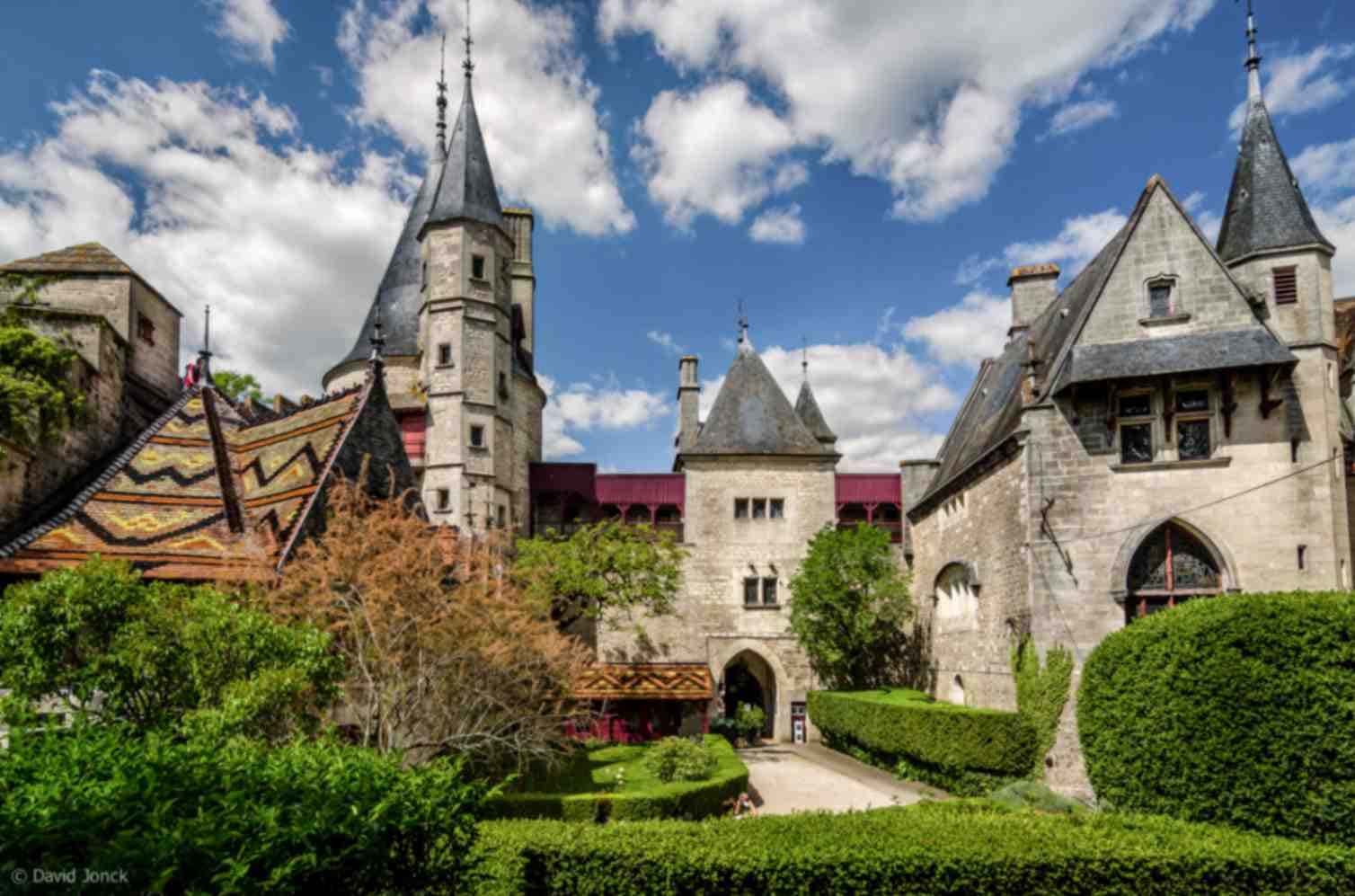
The continue to their second tasting discovering the various heritage of that Chateau de La Rochepot. Chateau de La Rochepot - Сhâteau de la Rochepot received its name and architecture thanks to to Regnier Pot, a crusader, Knight of the Order of the Golden Fleece and a master of the court of Philip II the Bold, Duke of Burgundy. During the 15th century Pot family turned a rocky peak to the fortress, which valiantly resisted the influence of time. In later centuries the castle was passing from hand to hand. Its owners were members of the Montmorency family and Cardinal Retz.The castle was renamed the Château de la Roche Fidèle («Castle of the faithful mountain”) after the French Revolution. It was declared the national property and was purchased by a contractor, who demolished some parts of the buildings. He began with a fortress, selling it stone by stone.
Subsequently, the castle was passing from hand to hand. Like many other monuments of this period, the castle could disappear, becoming a ruin, but in 1893, Madame Carnot, the wife of Sadi Carnot, the president of France (1887-1894), bought the ruins of the Château de la Rochepot and o ered it as a gift to an older son, Colonel Sadi Carnot. He decided to give the second life to the castle and restore it according to the original style of the 15th century. It took more than 25 years to realize this ambitious goal. The reconstruction was based on the data from archives, archaeological excavations to comply with the full historical authenticity. About 600 local residents were involved in the construction work, many of whom were unemployed after the death of the vineyards from the epidemic of phylloxera. Because of its uniqueness, elegance and its glorious history, Chateau de la Rochepot has become a symbol of Burgundy in the world.
The continue to their second tasting discovering the various heritage of that Chateau de La Rochepot. Chateau de La Rochepot - Сhâteau de la Rochepot received its name and architecture thanks to to Regnier Pot, a crusader, Knight of the Order of the Golden Fleece and a master of the court of Philip II the Bold, Duke of Burgundy. During the 15th century Pot family turned a rocky peak to the fortress, which valiantly resisted the influence of time. In later centuries the castle was passing from hand to hand. Its owners were members of the Montmorency family and Cardinal Retz.The castle was renamed the Château de la Roche Fidèle («Castle of the faithful mountain”) after the French Revolution. It was declared the national property and was purchased by a contractor, who demolished some parts of the buildings. He began with a fortress, selling it stone by stone. Subsequently, the castle was passing from hand to hand. Like many other monuments of this period, the castle could disappear, becoming a ruin, but in 1893, Madame Carnot, the wife of Sadi Carnot, the president of France (1887-1894), bought the ruins of the Château de la Rochepot and o ered it as a gift to an older son, Colonel Sadi Carnot. He decided to give the second life to the castle and restore it according to the original style of the 15th century. It took more than 25 years to realize this ambitious goal. The reconstruction was based on the data from archives, archaeological excavations to comply with the full historical authenticity. About 600 local residents were involved in the construction work, many of whom were unemployed after the death of the vineyards from the epidemic of phylloxera. Because of its uniqueness, elegance and its glorious history, Chateau de la Rochepot has become a symbol of Burgundy in the world.
The guide will bring the clients back to the hotel or residence.